The Designated Villain - Prologue
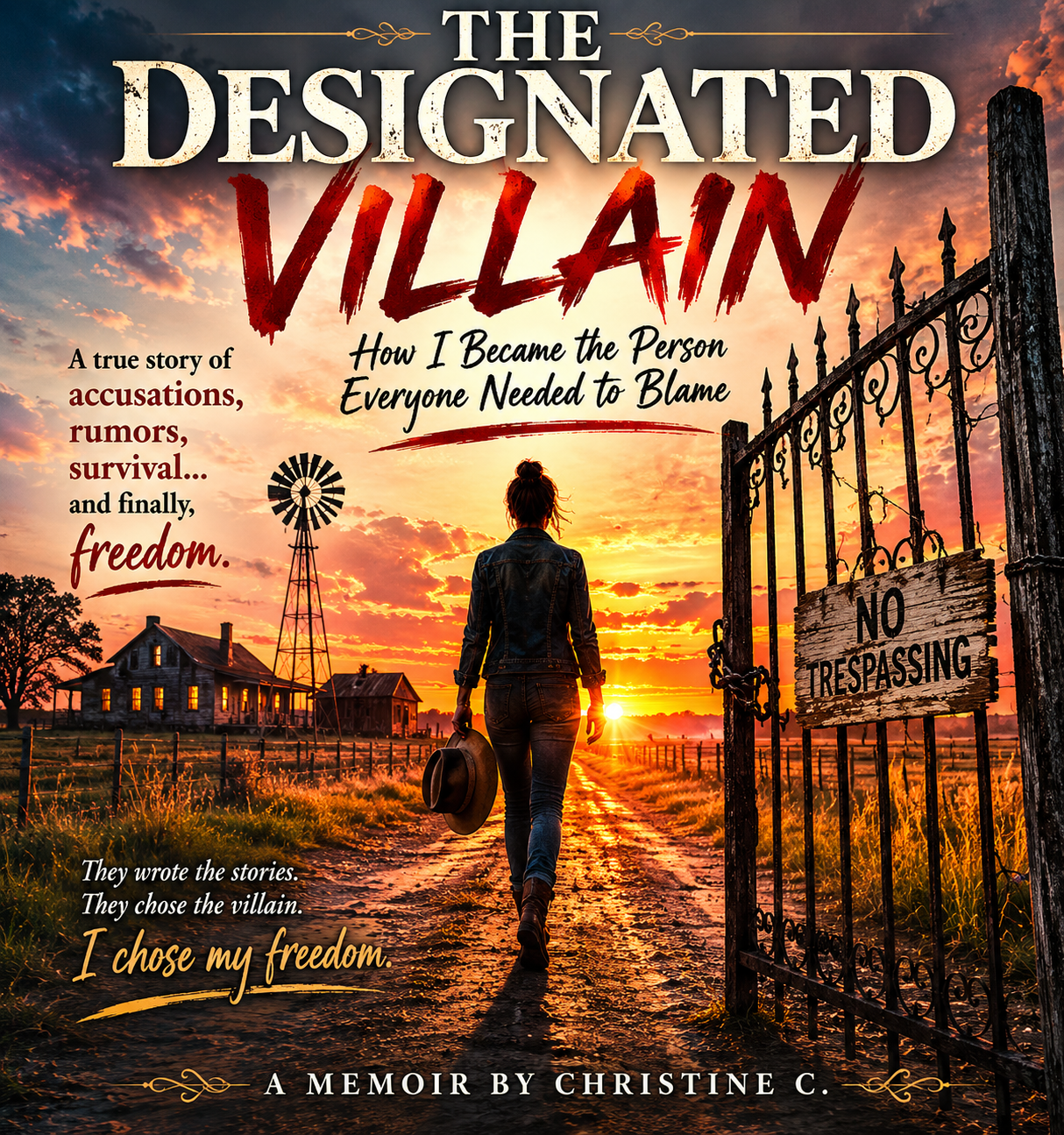
THE DESIGNATED VILLAIN
How I Became the Person Everyone Needed to Blame
PROLOGUE
Dead Chickens and Other Crimes
The first time I was blamed for a dead chicken, I laughed.
Not because dead animals are funny.
Because the accusation itself felt so profoundly impossible.
It was the kind of absurdity that shouldn't require a defense.
The kind that reasonable people hear and immediately dismiss.
Or so I thought.
The chicken had died overnight.
Animals die.
Especially on farms.
Predators exist.
Disease strikes.
Nature has never been particularly interested in fairness.
By morning, however, the discussion was no longer focused on the coop.
It was focused on me.
The accusation wasn't supported by evidence, logic, or opportunity.
It was supported by something much harder to argue against:
Expectation.
People see what they expect to see.
And expectations had been quietly forming around me for years.
One story at a time.
The dead chicken wasn't the point.
If it hadn't been poultry, it would have been a missing tool.
A damaged fence.
A broken relationship.
The details changed.
The destination remained remarkably consistent.
Back then, I still believed facts mattered.
I still believed accusations required proof.
I still believed reality would eventually have a say in the matter.
What I didn't understand was that reality had already lost its voting privileges.
The story had become more powerful than the evidence.
And once a narrative reaches that threshold, facts become optional.
The dead chicken wasn't an isolated incident.
It was a symptom of a deeper, invisible process that transforms complex human beings into convenient scapegoats.
To understand how something so ridiculous could become settled fact, you have to understand everything that came before it.
The farm.
The family.
The gate.
The rumors.
Nobody wakes up one morning and suddenly becomes the villain.
That transformation happens one small assumption at a time until the role becomes so familiar that people stop questioning it.
To understand how we got there, we need to go back to the beginning.
Back to a time before the stories changed.
Back to a time when I still believed family meant protection.
Back to a time before they hated me.

Comments
Post a Comment